John Innes Park
My main memory of John Innes Park is bound to loose-endish childhood days with my afterschool club. I never enjoyed afterschool and have vividly recalled feelings of resenting my mum for sending me there as a child. Nowadays, those feelings have transmuted into deep admiration and proud respect for my (brilliant) mum who looked after me with heroic kindness and skill, and who also upheld an impressive managerial career working in housing and social welfare charities. She is, more than anyone, my biggest supporter and role model all in one person. And for that, I couldn’t say thank you enough (or buy a suitably expensive gift to demonstrate this).
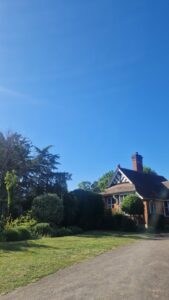
The feelings about parks have also transmuted into new ones. I go to parks and gardens with my mum at regular intervals these days. Sometimes we potter about at National Trust sites, enjoying egg sandwiches in the tearooms and picking up nonsense in the gift shops. Sometimes we go for a walk by the river and through wetlands (more on wetlands in an upcoming post). Sometimes it is enough to sit together in the garden with a cup of tea whilst we do or don’t talk about work. I enjoy all of these in a way which feels restorative, companionable, and calming.
But John Innes park is still a stumbling point in my green-space journey. I tried to venture there again recently before a medical appointment at the local health centre. That, and the person with a completely out-of-control dog, made the experience less than perfect. To be sure, there was a really nice moment at the beginning when the sun was shining, vitamin D felt like it was seeping into my skin, and I had a book to leaf through. But then the reality of the after-work bloodtest and the f**king unleashed dog set in. I was transported back to the John Innes of my childhood where overworked and tired teaching assistants had to shepherd round a bunch of annoying children (me included) as we refused to put on suncream and generally bickered with each other.
Even as I stood up from the bench and ventured into the rockery and bandstand areas, my mind was more filled with unsettled, bored childhood feelings than appreciating the park. This is so different from my experience of say, Hyde Park (either London or Leeds), or Battersea Park, or even the strange delights of marching round Central Park when I visited New York in 2016.
To remedy this problem I am offering myself two solutions:
- I will do some meaningful research into John Innes the man and John Innes the park.
- I will try and visit the park with a new friend – someone who I didn’t know back in my afterschool-club days.
Here is Part 1
Who was John Innes?
John Innes is known as a charitable sort of person, he used his wealth to fund various philanthropic endevours in South West London in the late 19th century.
His family had less than delightful origins for their wealth (clue: he was from a rich, white, protestant family who became rich in the 1790s through their knowledge of crop farming and trade). The Innes family had made their fortune in Jamaican sugar plantations which often operated under the abuse of enslaved Black African people. The Innes family eventually moved to support anti-slavery campaigns, leading to the subsequent sale of their sugar plantations.
Although his family had sold away the sugar plantations which were funding their rum business, John Innes went into the City of London as a wine merchant. After a while, Innes got bored of wine sales and moved into property development.
I have to be honest here, learning about Innes’ background is not inamouring me to the titular Gardens. We have a posh-boy wine-salesman-cum-property-twat whose family wealth came from links with the transatlantic slave trade. Hmm.
Oh, and then he went and built himself a manor house in South-West London.
Luckily, by the late 1890s there was a small shift and Innes began developing the local area with a slightly more charitable attitude. He installed wide roads and campaigned for more spacious houses with access to gardens and plots of nature.
He also built a school using some funds he had lying around, so I guess that’s good – even if the school later became the rivals to my brother’s Year 12 cricket team.
John Innes never married or seemed to have any particular romantic interests, and was fittingly buried in St Mary the Virgin’s churchyard. In a final charitable hurrah he left his property (OHHHH i see where the John Innes Gardens fit in now) and gardens to the local community. These are obviously what is now John Innes Park.
Apparently the manor house is still visible from the park (it is amalgamated into the school I previously mentioned). Although when I went last Thursday, the trees were overgrown so I actually couldn’t see it.
In his will, he went big on leaving gardens and museums for the public good. He wanted to institute a “practical and scientific” learning centre where practical horticulture would be taught. He wanted a botanical research centre in his name, too – this would be focused on “growth of trees and plants generally, but especially of fruit trees, shrubs, fruit, vegetables and flowers”.
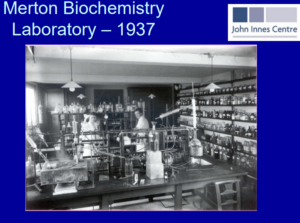
Honestly, there are then a lot more old white blokes associated with the legacy of Innes’ research and education funds but my attention is really slipping by this point in the research.
Conclusion: John Innes was not that bad a guy, I guess, even if his family were a bit fucked. Um. He seems fairly boring to be totally honest. My opinion of the John Innes Park has not changed considerably, and the history felt fairly predictable.
Conclusion #2: I want to find out more about the history of the sugar plantation in Jamaica which the Crawford-Innes family controlled. Apparently it was named the Bellefield Plantation. This, I think, will be my next deep-dive.
Stay tuned!
Leave a Reply