The Boboli Gardens, Palazzo Pitti
Despite a very packed school trip to Florence in 2017, we missed the Boboli Gardens. At the time I didn’t mind. To be honest, I didn’t know anything about them. I was far more interested in the architecture and story of the Ospedale degli Innocenti (seriously, the history is fascinating), the treasures in the Uffizi, and the novelty of drinking alcohol with teachers(!).
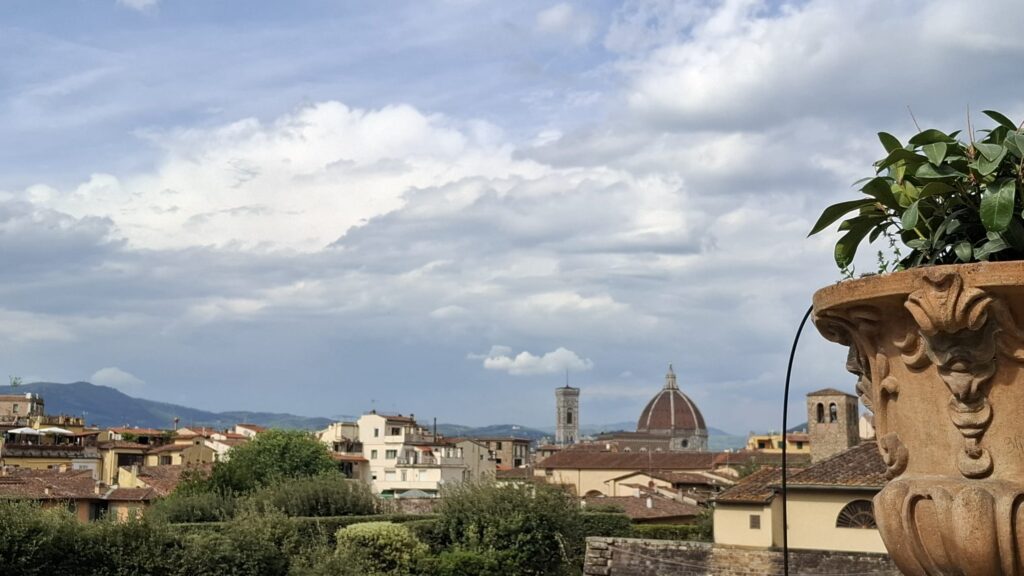
Described variously as as an ‘outdoor museum’ or a ‘living museum’, the gardens are (judging from other people’s reactions throughout history) something to behold. Probably the first formal garden in Italy, created in the 16th century for the Medici family, these gardens are located behind the Pitti Palace.
They are the first formal gardens of their kind in Europe, with their plans originating under Eleonora di Toledo – she was married to Cosimo I (the last Duke of Florence).
The inspiration is a mixture of classical inspiration from pastorals and eclogues, combined with the fertile abundance which French contemporaries were exhibiting in their green spaces. Over time, pieces of art were inserted into the gardens (which are themselves a work of art). In the late 1660s Stoldo Lorenzi created a magnificent bronze fountain in the form of Neptune. Unfortunately, Lorenzi’s creation was overshadowed by Ammannati’s Fountain of Neptune at the Palazzo Vecchio. Before that some splendid grottos were designed for Boboli by Bernardo Buontalenti (I hope you appreciate the alliteration there).
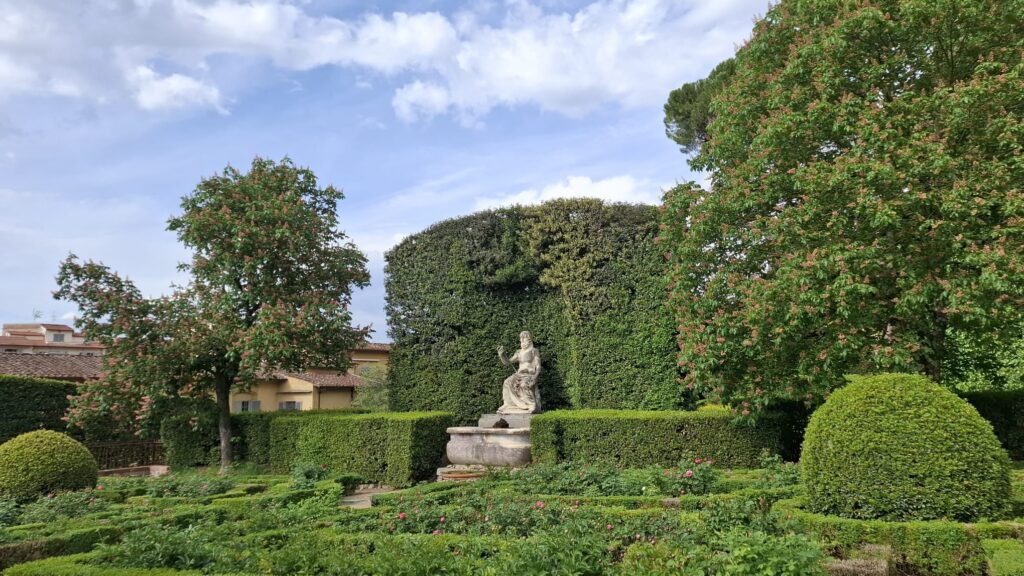
In the 1700s – my favorite historical period – many additions were made, including a German-Austrian Pavilion for a Kaffeehaus. At a similar time Zanobi del Rosso built the Lemon House in 1777. In 1816 a side room was added to hold more equipment.
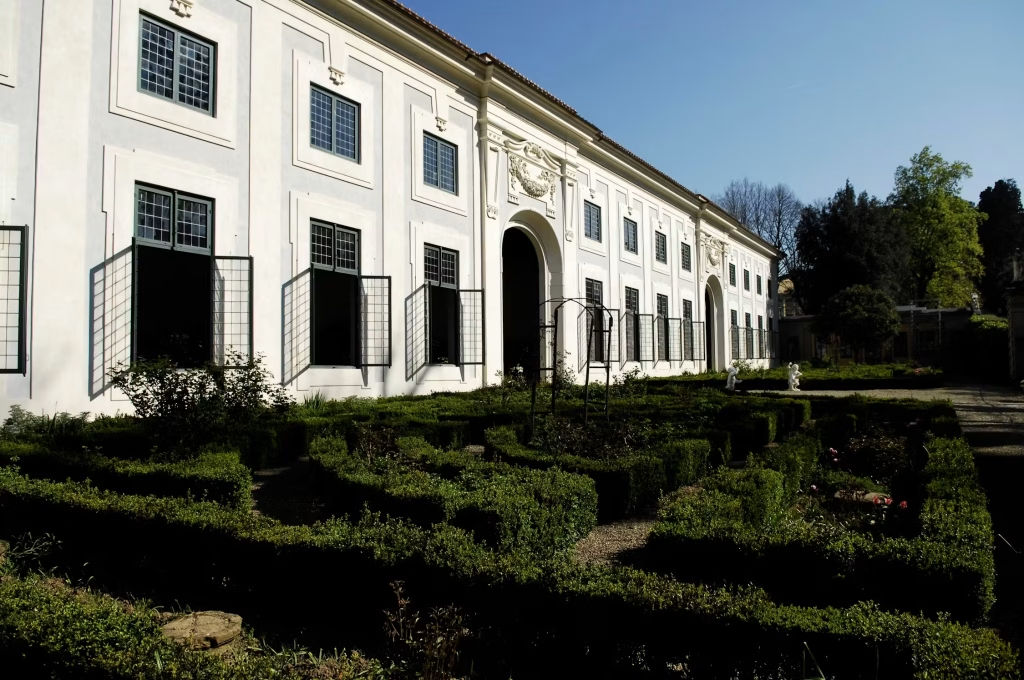
The Lemon House is a horizontally aligned two storey building with a smooth white and eggshell-blue plaster facade (I looked this up later, apparently it’s called Lorraine green). It is symmetrical and regular, obeying Vitruvian proportions. The second storey is ⅓ the height of the first. The facade is punctuated by regular, large arched doorways which exceed the height of the first storey. It is topped by an elaborate neoclassical cartouche. The roof appears flat and is covered in red Tuscan tiles.
The Lemon House was designed to look after all the citrus trees in the garden over the winter months. At the peak, this included over 500 lemon, orange, lime, and bergamot plants. The best citrus they grow in the gardens and store in the Lemon House is the agrume ‘Bizzarria’ which looks like a warty pumpkin had a baby with a naval orange. We think this all began with Cosimo I who was into collecting fruits from across the Med and the middle east. I have never been inside, but apparently ‘inside, two long walls of different heights enable citruses to benefit from the sunlight without getting in the way of one other’.
Something about Orangeries really fascinates me. It might be to do with the unavoidable colours – the oranges, yellows, delicious greens – of the fruits. It might be because in England the weather is so oppositional to being able to actually grow these things. It might be because orange juices and lemony zests are among my favorite delights both for smelling and tasting.
I think it is also something about the quietness of the Lemon House as a space. Apart from the initial bustle of moving the plants into the building, the spaces are silent a lot of the time. This is not inherently unusual but the grandness and height requirements make orangeries echoey and warm edefices. I think the combination of resonant acoustics and Mediterranean heat make it seem like a magically real place in my imagination – which is only extended because orangeries were , when the day was done, often used as fanciful party spaces for unfathomable aristocrats.
Anyway, this is all getting quite off-track.
In the next post I want to jump a few hundred years on from the Boboli Gardens and venture into the dank grottos of 18th century England. I do hope you’ll join me.
When my friend [name redacted] went to Florence in April 2026 on a study grant, she took some fabulous photos of the gardens, so please enjoy these.
Leave a Reply